Vertical Access strives to eliminate uncertainty in
the design and construction process by providing
accurate, reliable and practical design documents to our
clients.
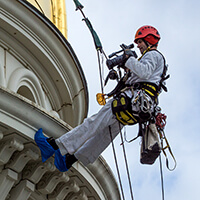
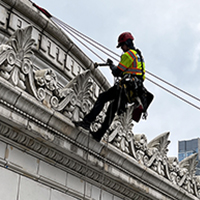
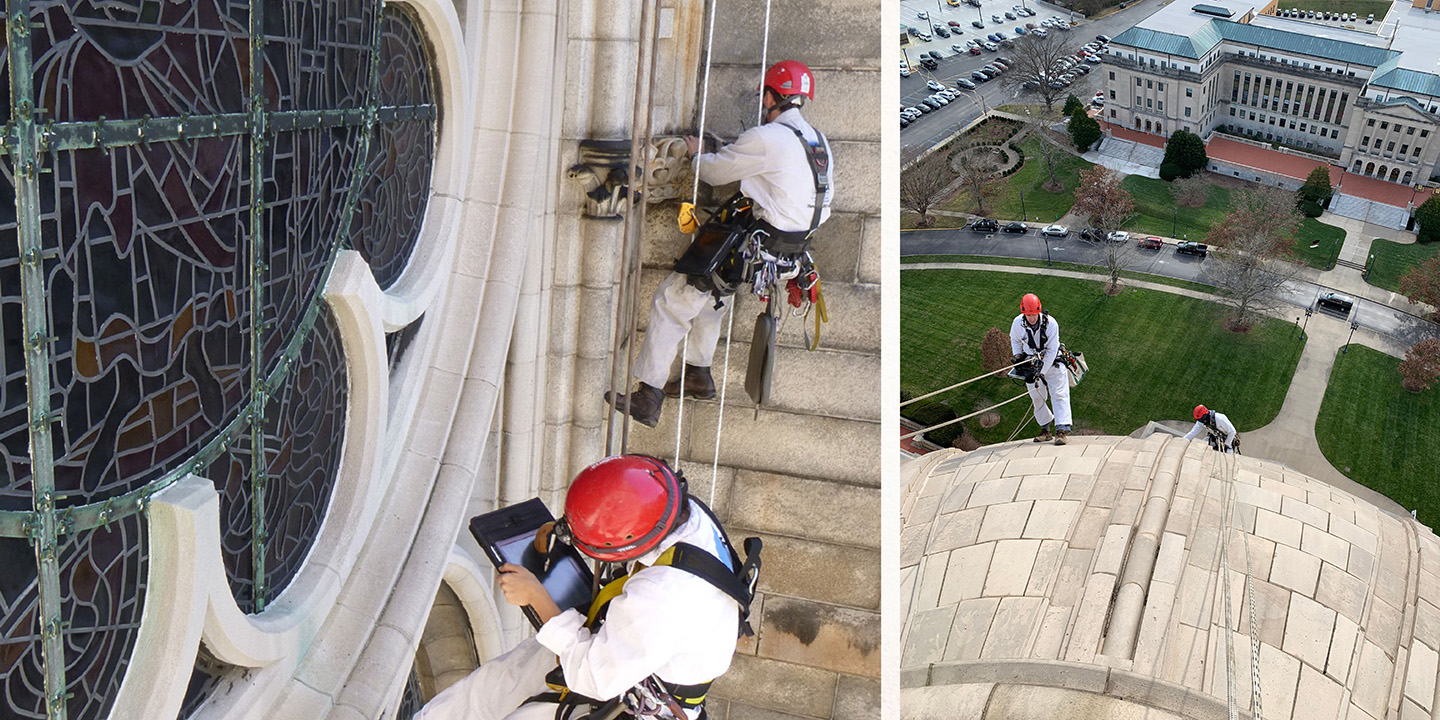
Vertical Access provides specialized building
inspections and condition reports for architects,
engineers, and conservators utilizing efficient,
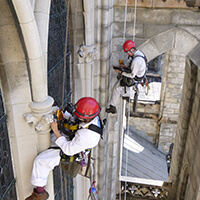
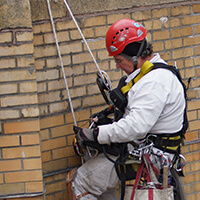
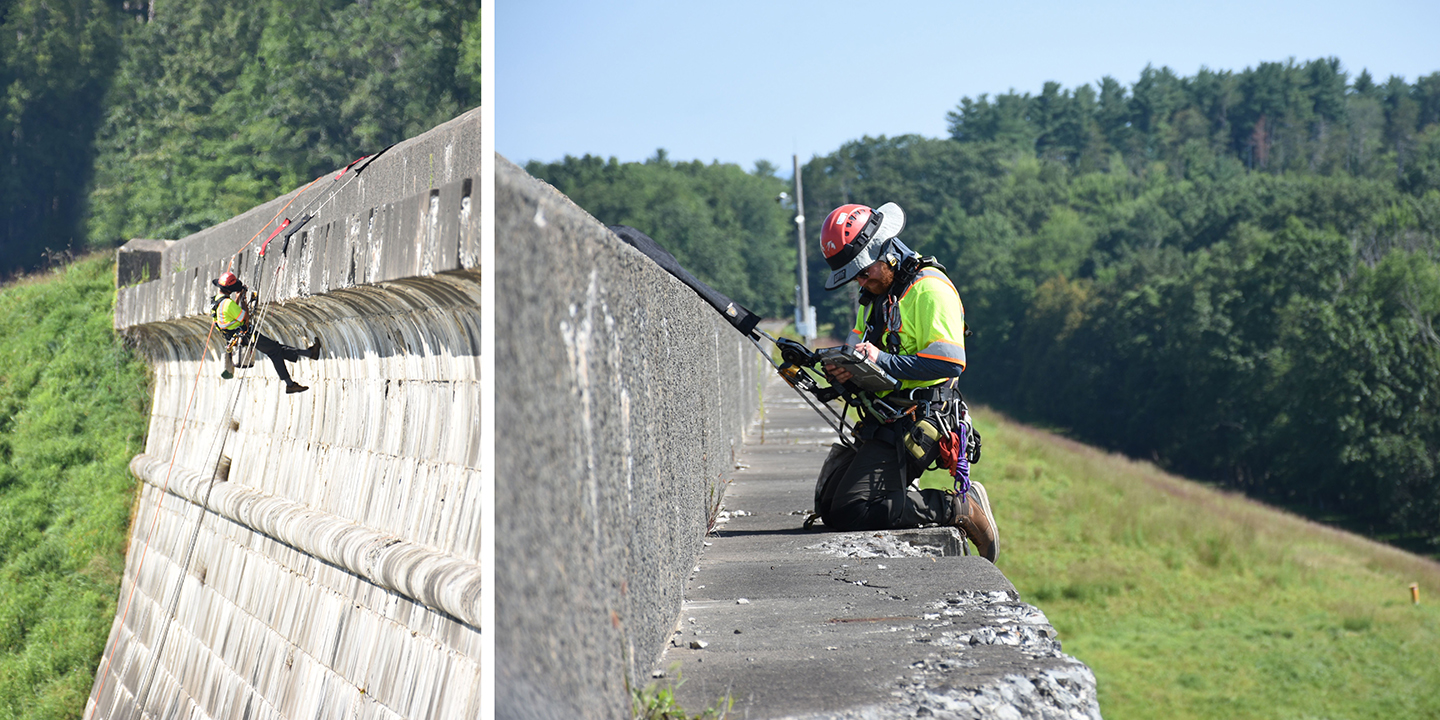
lightweight rigging systems and industrial rope access techniques.
This unique approach to
architectural investigation offers quick, "hands-on"
access without expensive and time-consuming
conventional swing stage or frame scaffolding,
cranes, and boom lifts.
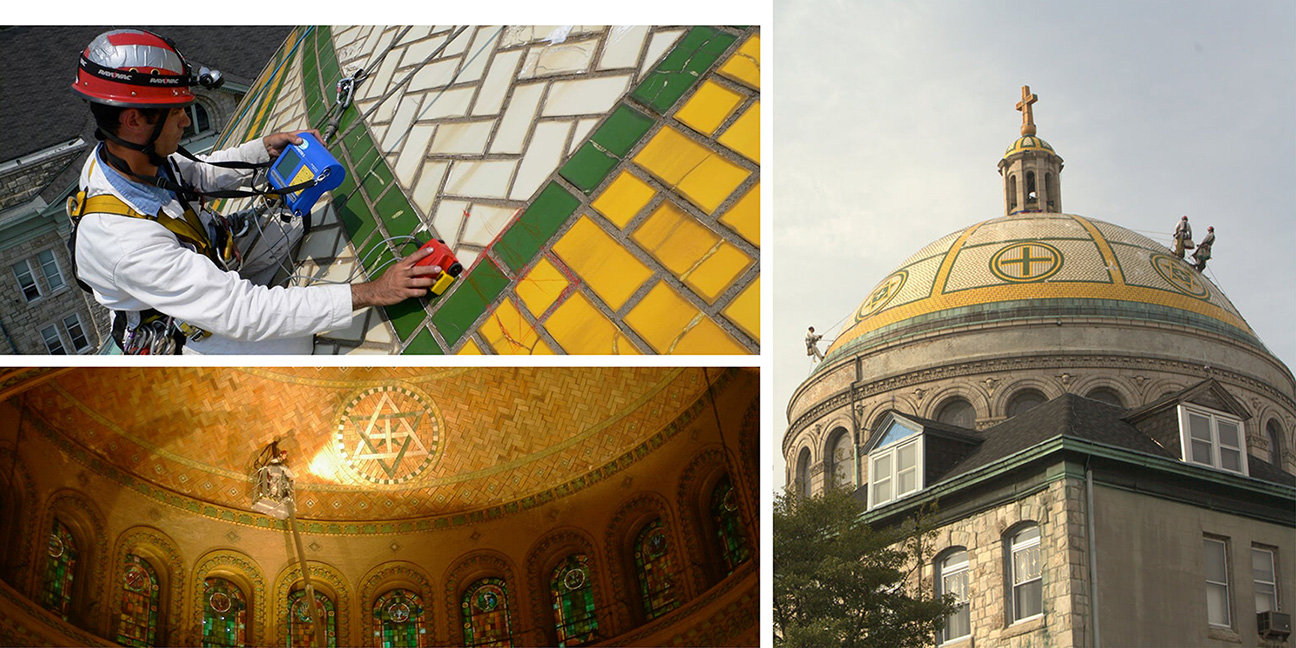
Our company's specialty are
buildings, monuments, bridges and other structures
with areas that are difficult to access
such as:
- steeples
- domes
- towers
- smokestacks
- chimneys
- high parapet walls
- screen walls
Vertical Access'
staff is comprised of historic building
preservationists, professional structural engineers
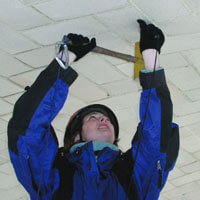
and technicians, all trained and SPRAT-certified in
industrial rope access techniques. In order to best conserve
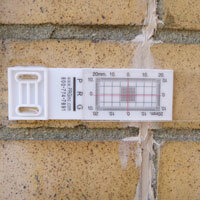
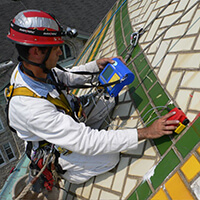
historic buildings, our team specializes in many non-destructive
testing techniques such as fiber-optic
investigations, ultrasonic thickness testing, acoustic
emission, wall tie location and more.
Because effective and intelligent collection of data
in the field is essential to providing consistent
and useful report documents, Vertical Access
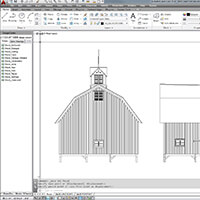
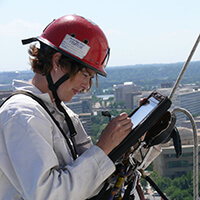
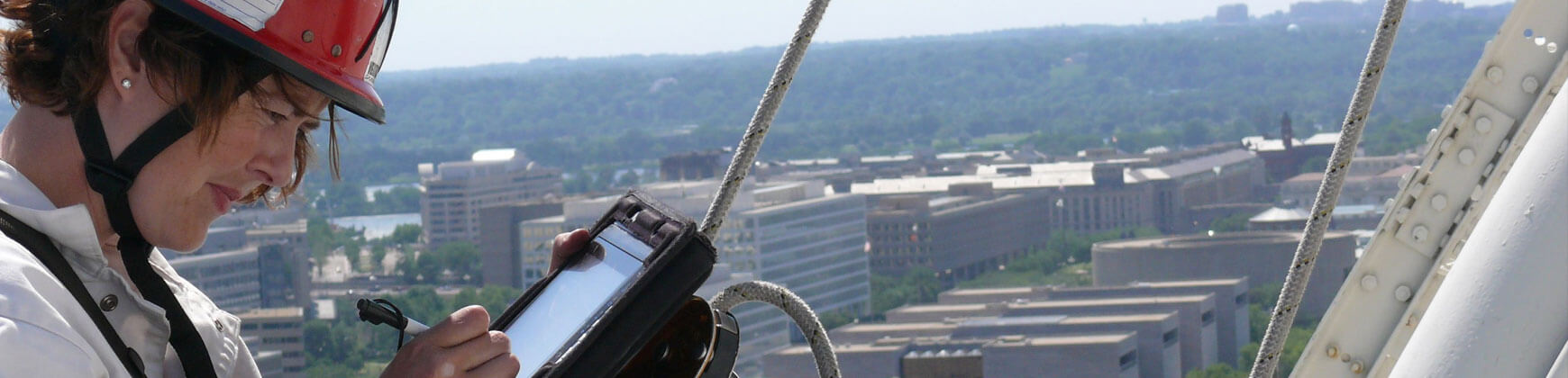
developed a tablet PC annotation system,
TPAS, to record and document existing
conditions. Using TPAS, both graphical and numeric data are entered
directly into an AutoCAD drawing in the field using tablet
Computers. Digital cameras and camcorders are used to capture
images and videos that are automatically hyperlinked to condition
codes in the annotated drawing.
While industrial rope access is the means to an end,
the ultimate service is the collection, management,
presentation, and sharing of condition survey data.
Vertical Access does not typically engage in repair
or maintenance work. Instead, by concentrating on
the
investigation and documentation of existing
conditions, Vertical Access maintains an objective
point of view, free of inevitable conflicts of
interest.